
Equity benchmarks extended their decline for the fourth straight session on Wednesday, with the Sensex falling 214.85 points after the Reserve Bank raised the key interest rate by 50 basis points. Continuous foreign fund outflows and surging crude oil prices also weighed on markets. The 30-share BSE benchmark dropped 214.85 points or 0.39 per cent to settle at 54,892.49.

The Reserve Bank of India's (RBI's) state of the economy report observed that any durable alignment of headline retail inflation with the target of 4 per cent could recommence in the second half of FY25 and sustain until numbers closer to the target are seen during the course of FY26, dashing hopes of any reduction in the policy repo rate in the current financial year. The report, authored by RBI staffers, including Deputy Governor in charge of monetary policy Michael Patra, said though headline numbers may fall in July and August due to base effect, it is likely to reverse in September.

RBI's interest rate decision, macroeconomic data, global trends and trading activity of foreign investors are the crucial factors to drive equity markets in a holiday-shortened week ahead, analysts said. Markets would remain closed on Monday for Gandhi Jayanti. "While global cues will continue to dictate trends in local markets, focus will shift to RBI's monetary policy announcement on Friday. "Although the market is expecting a status quo on interest rates, global concerns like rising US dollar index and bond yields coupled with surging crude oil prices continue to weigh on investors' minds.
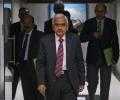
With the 115 bps reduction in repo rate beginning February, banks have already transmitted 72 bps to the customers on fresh loans and some large banks have transmitted as much as 85 basis points.
For five consecutive policy reviews in 2023, the Reserve Bank of India (RBI) chose to hold rates, citing inflation threat. And when the prices did cool off a bit, it reminded all about the target to get the headline consumer price inflation at 4 per cent and the risks from food inflation. Heading into the new year, all eyes are on when RBI will cut the rates, especially after one of the Monetary Policy Committee (MPC) members stressed on the need for such an action in the face of the US Federal Reserve's guidance for easing rates.
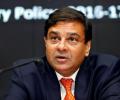
Demonetisation to result in short-run disruptions in cash-intensive sectors like retail, hotels, restaurants and transportation, RBI said while announcing the Monetary Policy
With concern on food inflation ebbing with the monsoon progressing well, the Reserve Bank of India (RBI) is warming up to the idea of a change in stance to "neutral" from "withdrawal of accommodation", according to economists. In his speech on Thursday during the annual event of the Federation of Indian Chambers of Commerce and Industry-Indian Banks' Association, RBI Governor Shaktikanta Das said: "The balance between inflation and growth is well-poised."

Escalating trade tensions amid a tariff war after Donald Trump took over as President of the United States (US) could adversely impact global growth and fuel inflation, an article on the "State of the Economy" in the Reserve Bank of India (RBI) monthly bulletin said.
The Reserve Bank of India has postponed the meeting of its interest rate setting Monetary Policy Committee by a day to August 3 due to administrative exigencies. The RBI said the decision of the MPC will be known on August 5 as against the earlier schedule of August 4. "Due to administrative exigencies, it has been decided to reschedule the MPC meeting from August 2-4, 2022 to August 3-5, 2022," RBI said in a statement on Thursday.
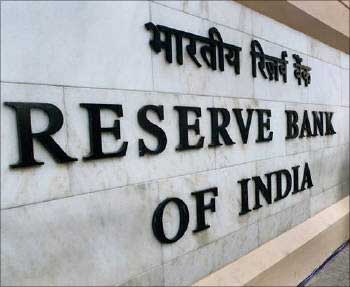
In policy review meet in June, RBI Governor Raghuram Rajan kept interest rates intact.

Urjit Patel panel wanted all members to be appointed by RBI
In the last three years, public sector banks have responded to the RBI's policy rates more strongly than private banks.

The Reserve Bank of India on Wednesday expectedly left interest rates unchanged and maintained an accommodative stance as the economy faces a renewed threat to growth due to the resurgence of coronavirus cases.

The Reserve Bank of India's (RBI's) interest rate decision, West Asia conflict and trading activity of foreign investors are the key factors that will dictate investors' sentiment in the market this week, analysts said. Moreover, quarterly earnings from IT bellwether TCS, domestic macroeconomic data and movement in global oil benchmark Brent crude would also guide trends in the market. Worsening tensions in the Middle East and foreign fund outflows were the major culprits behind the equity markets sharp fall last week.
The SBI report ruled out a October rate hike

Manufacturing activities in India fell to a five-month low in September as new orders rose at a softer pace, which tempered production growth, a monthly survey said on Tuesday. The seasonally adjusted S&P Global India Manufacturing Purchasing Managers' Index (PMI) fell to 57.5 in September, down from 58.6 in August -- the lowest in five months. The September PMI data pointed to an improvement in overall operating conditions for the 27th straight month.

The Reserve Bank's rate setting panel on Thursday met to finalise a report for the government on why it failed to keep retail inflation below the target of 6 per cent for three consecutive quarters since January this year, said sources. The report will be presented to the government as per the Reserve Bank of India Act, they added. The six-member Monetary Policy Committee (MPC) is headed by Governor Shaktikanta Das.
The MPC headed by RBI Governor Shaktikanta Das will announce the resolution of the meeting at around noon on Thursday.
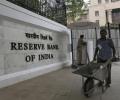
It further pointed out that the twin balance sheet problem -- at the end of banks and corporate -- more attractive interest rates for borrowers in the bond market and from non-banking financial institutions are other reasons for slow bank credit growth.

The Urjit Patel committee on monetary policy framework has proposed setting up of a monetary policy committee (MPC) that will be headed by the Reserve Bank of India (RBI) governor and accountable for achieving inflation target set by it.

The Monetary policy committe comprising 6 members voted 6-0 in the favour of the rate cut.
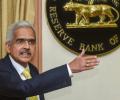
In the second policy review under Governor Shaktikanta Das, the six-member Monetary Policy Committee voted 4:2 in favour of the rate cut.

Consensus among members at April policy meet that rupee be allowed to depreciate

RBi pushes for reinvigorating private investments, clearing infra bottlenecks and providing big thrust to Pradhan Mantri Awas Yojana.
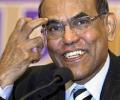
Monetary policy committee had recommended no change in the key rate.

The services sector growth in India fell to a one-year low in November on softer expansions in new work intakes and output, despite receding price pressures, a monthly survey said on Tuesday. The seasonally adjusted S&P Global India Services Business Activity Index fell from 58.4 in October to a one-year low of 56.9 in November. Despite witnessing a month-on-month decline, the rate of expansion was stronger than its long-run average.

HDFC Bank was the top loser in the Sensex pack, shedding over 3.5 per cent, followed by Bajaj Finance, L&T, HDFC, Bajaj Finserv, HDFC and Kotak Bank.

Retail inflation rose to three-month high of 4.81 per cent in June, mainly on account of hardening prices of food, according to the government data. Inflation based on the Consumer Price Index (CPI) stood at 4.31 per per (revised upward from 4.25 per cent) in May and 7 per cent in June 2022. The inflation, however, remains within the RBI's comfort level of below 6 per cent.

Finance Minister Arun Jaitley on Saturday said that retail inflation is expected to remain close to 5 per cent

Reliance Industries was the top gainer in the Sensex pack, rallying nearly 4 per cent, followed by Infosys, Tech Mahindra, HCL Tech, TCS and L&T.

India needs foreign exchange buffer reserves to insulate itself from exchange rate volatility as we have "no friends" for swap lines and Japan was the only country that helped during the taper tantrum in 2013, former RBI Governor Raghuram Rajan said on Tuesday. Participating in a virtual event organised by economic think tank NCAER, Rajan said during the taper tantrum in 2013, India asked for swap lines, and only country who helped was Japan. "We need this (foreign exchange) reserve buffer to insulate ourselves because we have no friends.

Top laggards in the Sensex pack included Kotak Bank, ICICI Bank, HDFC Bank, Tata Motors, L&T, SBI, Tata Steel and Axis Bank, falling up to 3.46 per cent.
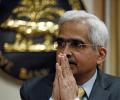
The Reserve Bank on Wednesday increased the benchmark lending rate by 40 basis points (bps) to 4.40 per cent in a bid to contain inflation, which has remained stubbornly above the target zone of 6 per cent for the last three months. The decision follows an unscheduled meeting of the Monetary Policy Committee (MPC), with all six members unanimously voting for a rate hike while maintaining the accommodative stance. While the inflation has remained above the targetted 6 per cent since January, RBI Governor Shaktikanta Das said the inflation print in April is also likely to be high.

The first task before him is to get used to the idea of working with the Monetary Policy Committee
The Reserve Bank of India (RBI) on Monday did a four-day variable rate reverse repo (VRRR) auction to reduce liquidity in the banking system as the overnight money market rates fell below the repo rate, said market participants. The repo rate is 6.50 per cent. Banks parked Rs 18,750 crore at the auction against a notified amount of Rs 50,000 crore at a weighted average rate of 6.49 per cent.

All six members of the Reserve Bank of India's (RBI's) monetary policy committee (MPC) expressed caution over food inflation during the December review, while two external members warned about high real interest rates as headline inflation approaches its target of 4 per cent. The central bank continued to maintain the status quo on both the repo rate and the stance in the December monetary policy. India's retail inflation in November rose to 5.5 per cent - its fastest pace in three months - due to higher food prices.
The RBI's rate-setting panel MPC on Monday began its three-day deliberation amid expectations of another round of hike in benchmark interest rates to contain inflation that continues to remain above the central bank's upper tolerance level. RBI Governor Shaktikanta Das will announce the decision of the Monetary Policy Committee after deliberations on Wednesday. Das has already indicated that there may another hike in the repo rate, though he refrained from quantifying it.

The spike in food prices at the onset of the monsoon season has corroborated the Reserve Bank of India's (RBI's) view that the fight against inflation is far from over, the State of the Economy report of the central bank said. At the same time, the report said that the country is poised to become the fastest-growing major economy in the world, notwithstanding some sequential moderation in economic activity in June. Consumer Price Index (CPI)-based inflation rate increased to 4.8 per cent in June 2023, from 4.3 per cent in May, primarily on account of an increase in food inflation.

'Whether I am optimistic or pessimistic is not the issue; I am just going by the evidence available.' 'The Indian economy and financial sector are now well-placed and very resilient in dealing with any kind of spillover coming from the external world.'
The Reserve Bank of India on Wednesday kept the benchmark interest rate unchanged at 4 per cent and decided to continue with its accommodative stance against the backdrop of concerns over the emergence of the new coronavirus variant Omicron.
 © 2026 Rediff.com - Advertise with us - Disclaimer - Privacy Policy - Sitemap - Feedback - About us - Terms of use - Grievances